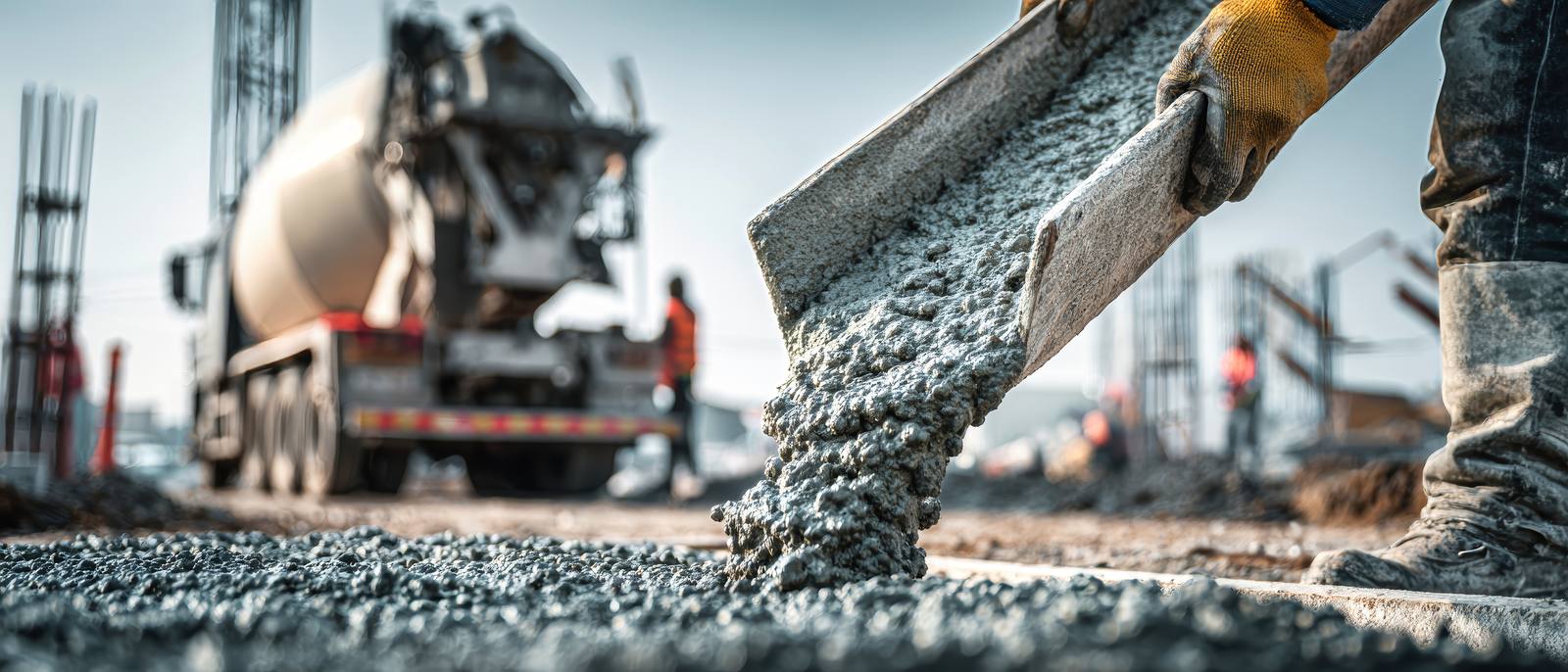
Ready-mix pour verification is a record, created automatically by the truck, that proves a load was delivered where, when and how the ticket says. A good system captures a timestamped photo of the pour, the GPS coordinates of the jobsite, and the times the chute went down and came up, then attaches all of it to the delivery ticket. When a contractor disputes a short pour, a late truck or waiting time, the producer answers with a file instead of a phone call.
Key takeaways
- Concrete can't be redelivered later, so the record of each pour is the only evidence of what happened on the jobsite.
- Pour verification stamps every frame with date, time and GPS, and logs arrival, chute down, chute up and departure automatically.
- The gap between arrival and chute down is documented waiting time, which makes standby billing easier to defend.
Why do ready-mix producers need proof of every pour?
Because concrete is the one delivery that can't be redone later. Once it's in the forms, the only evidence of what happened is whatever someone wrote down, and the driver's paperwork is usually finished at the end of a long shift from memory.
The volume of loads makes small gaps add up. According to the National Ready Mixed Concrete Association (NRMCA), U.S. producers delivered an estimated 379 million cubic yards of ready mixed concrete in 2024. Every one of those loads has a ticket, a jobsite and a customer who may remember the day differently than your driver does.
Concrete also runs on a clock. The industry specification for ready mixed concrete, ASTM C94, sets a 90-minute window for discharge, a limit that dates back to 1935, according to a research report from the RMC Research & Education Foundation. When a load is questioned because of how long it sat in the drum, the producer needs to show exactly when the truck arrived and when the pour started.
Then there is waiting time. Trucking research shows how common and costly it is to sit at a customer's site. In a 2024 study of 2023 data, the American Transportation Research Institute (ATRI) found that:
- Drivers reported being detained at 39.3% of all stops.
- 94.5% of fleets charge detention fees, but fewer than half of those invoices get paid.
- Trucks that were detained drove 14.6% faster on average than trucks that weren't.
ATRI studied for-hire trucking, not ready-mix specifically, but every dispatcher will recognize the pattern: time on site that can't be proven is time that doesn't get billed, and a truck running behind is a truck under pressure.
“Late arrivals are the biggest culprit, and short loads come in second. On-site crews appreciate estimated times of arrival, and work orders showing the amount of product help deter short loads.”
Barry Saunders, President, S-Vision
What does a pour verification record include?
The S-Vision ready-mix system builds the record from the truck itself, so nobody has to remember to take a phone photo. The moment the chute goes down, it captures the jobsite: the truck, the placement, the crew and the conditions. Each frame is stamped with the date, time and GPS coordinates, then written to the delivery ticket.
| What's captured | What it proves |
|---|---|
| Timestamped photo evidence | The pour happened, and what the site looked like |
| GPS coordinates | The load went to the right jobsite and placement |
| Service start and stop times | When the chute went down and when it came up |
| On-site duration | How long the truck was at the jobsite, including waiting time |
| Auto-attached ticket record | Photos, GPS and times live with the ticket, not on a driver's phone |
This is the same idea as S-Vision's broader service verification: image-verified, geolocated proof of every stop, applied to the specific timeline of a concrete pour. (For the same approach on route delivery trucks, see our post on proof of delivery for beverage and route delivery fleets.)
How are chute times captured on each load?
Every stage of the delivery is logged automatically, so the ticket reflects what happened on the jobsite rather than what someone wrote down afterward. A typical load looks like this:
- Arrived. The truck enters the jobsite geofence and the arrival time is logged.
- Pour start. The chute goes down. The first evidence frame is captured and stamped, marking service start.
- Placement. Video records the pour, the crew and the slab conditions.
- Pour complete. The chute comes up. A final frame closes the evidence record and marks service stop.
- Departed. The truck leaves the geofence and the ticket closes with photos, GPS and times attached, ready to push to the producer's ERP.
The gap between “arrived” and “pour start” is the number that matters for standby billing. The gap between “pour start” and “pour complete” answers questions about how the load was placed.
How does pour verification settle disputes?
Most ready-mix disputes come down to three questions: Did the load arrive? When did it arrive? How long did the truck wait? With a pour verification record, each one has a documented answer.
- “We never got that load.” The photo shows the truck and the placement at the GPS-located jobsite.
- “Your truck was late.” The geofence arrival time is on the ticket, to the minute.
- “We're not paying for standby.” The time between arrival and chute down is recorded automatically.
- “It went in the wrong place.” GPS coordinates and the placement photo show where the concrete went.
What else should be on a ready-mix truck besides pour verification?
Proof of delivery is one part of the picture. Mixers are large, heavy vehicles that back into tight jobsites full of people, so the same system should protect drivers and the public, and keep the next jobsite informed.
- 360° coverage. 360° surround cameras give the driver a view around the whole mixer, including the blind spots that matter most when backing up to a pour.
- Driver monitoring. The S-Vision AI dash cam runs two AI channels at once: ADAS watches the road for forward collision risk, following distance, lane departures, stop signs and pedestrians, while DMS watches for distraction, fatigue, phone use and seatbelt compliance. (For more, see our post ADAS vs. DMS: How AI Dash Cams Stop Crashes Before They Happen.)
- Jobsite notifications. Plants and jobsites are geofenced. When a mixer leaves the plant, the next stop's contact and the dispatcher are notified with a live ETA by SMS, email or app push, so the crew and pump are ready when the truck arrives.
- One place to review it all. Pour records, safety events and video land in SV-Cloud, which also has open integrations with platforms such as Samsara, Lytx and Geotab.
“Both safety and service verification are important to ready-mix delivery companies. However, I would place safety and reduced liability for property damage at the top of the list. Having video footage of what takes place at a site is instrumental in risk mitigation.”
Barry Saunders, President, S-Vision
What should a ready-mix producer look for in a pour verification system?
- Evidence captured automatically by the truck, with no driver phone photos or paperwork
- Date, time and GPS coordinates stamped on every frame
- Separate times for arrival, chute down, chute up and departure
- Records attached to the delivery ticket and sent to your ERP
- Safety cameras and driver monitoring on the same platform, so you aren't managing two systems
Frequently asked questions
What is pour verification in ready-mix concrete?
Pour verification is an automatic record that proves a concrete load was delivered. It includes a timestamped photo of the pour, the jobsite's GPS coordinates and the times the chute went down and came up, all attached to the delivery ticket.
How does pour verification help with standby or waiting-time billing?
The system logs when the truck entered the jobsite geofence and when the chute went down. The time between the two is documented waiting time that a producer can show the customer when billing for standby.
Does the driver have to take photos?
No. With S-Vision, cameras on the truck capture the evidence when the chute goes down and when it comes up, and the record is attached to the ticket automatically.
How much ready mixed concrete is delivered in the U.S. each year?
The NRMCA estimates U.S. ready mixed concrete production at about 379 million cubic yards in 2024.
Can pour verification work with other fleet systems?
Yes. Pour records live in SV-Cloud, which has open integrations with fleet platforms such as Samsara, Lytx and Geotab, and completed tickets can be pushed to the producer's ERP.
See pour verification on your mixers
S-Vision puts timestamped pour evidence, 360° safety coverage, driver monitoring and automatic jobsite notifications on every ready-mix truck. Request a demo to see how it works for your plant.
Sources
- National Ready Mixed Concrete Association (NRMCA), Estimated Ready Mixed Concrete Production by State, 2024
- Concrete Products, Report questions 90-minute discharge window in ASTM C94 (RMC Research & Education Foundation report, June 2020)
- American Transportation Research Institute, New Research Documents Substantial Financial and Safety Impacts from Truck Driver Detention (September 2024)
- S-Vision, Ready-Mix, Service Verification and SV-Cloud Platform