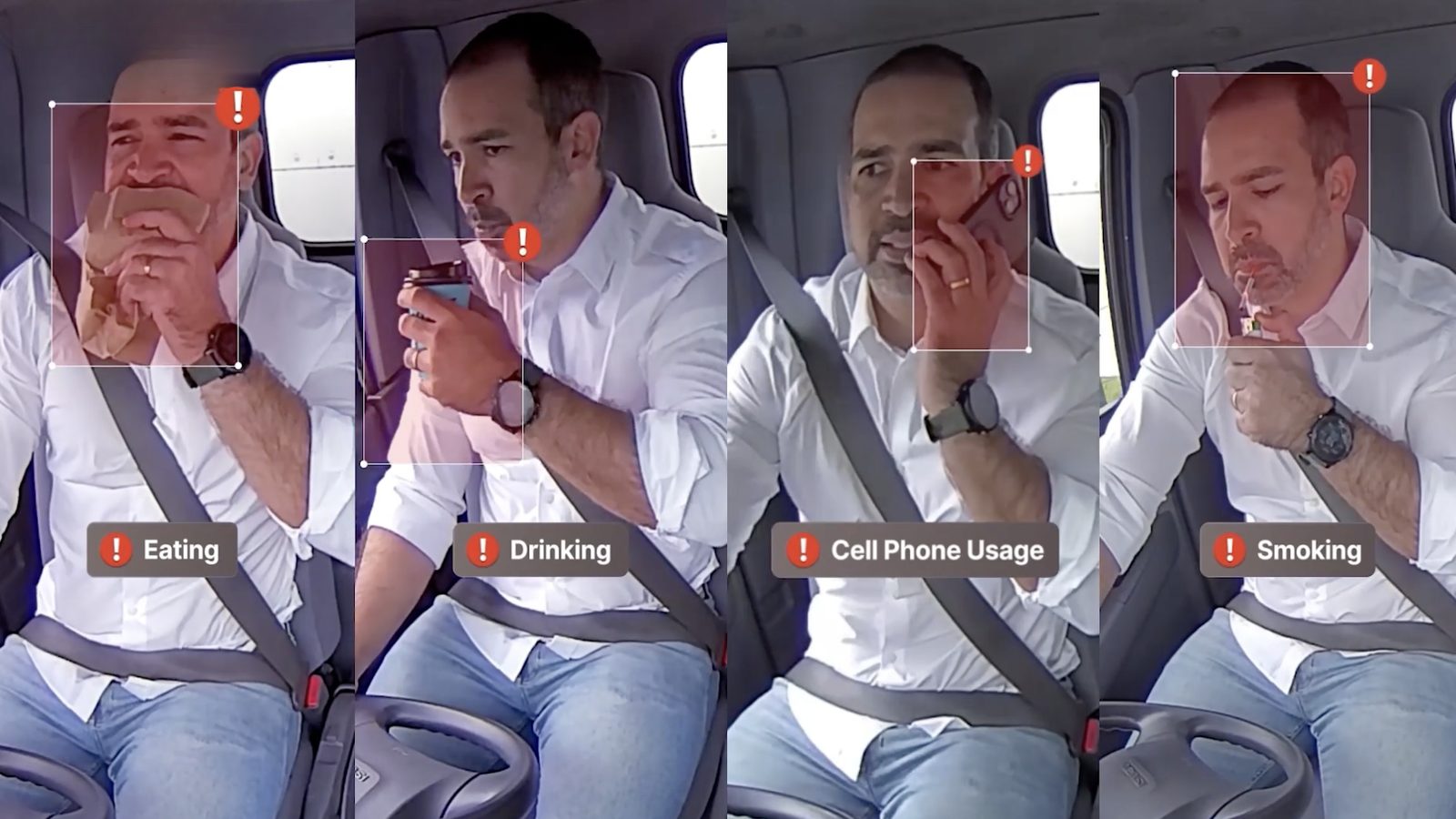
ADAS (Advanced Driver Assistance Systems) watches the road and warns drivers about hazards like a vehicle braking ahead or drifting out of the lane. DMS (Driver Monitoring System) watches the driver and warns about distraction, fatigue, phone use or a missing seatbelt. A fleet dash cam that runs both catches the two biggest causes of preventable crashes, what's happening outside the vehicle and what's happening behind the wheel, and alerts the driver in time to react.
Key takeaways
- ADAS covers the road: forward collisions, following distance, pedestrians, lane departures, stop signs and speeding.
- DMS covers the driver: distraction, fatigue, phone use, seatbelts, smoking and camera tampering.
- One dual-lens S-Vision dash cam runs both, and every alert becomes a video clip for coaching and claims defense.
Why do fleets need both road and driver monitoring?
Because most serious crashes involve both a hazard on the road and a driver who didn't see it in time. A road-facing camera alone records the crash. Adding driver monitoring helps prevent it.
The numbers show how much driver behavior matters:
- According to NHTSA, 3,208 people were killed and an estimated 315,167 were injured in crashes involving distracted drivers in 2024. At least 437 of those deaths involved a driver using a cellphone.
- Drowsy driving is badly undercounted. Police reports attribute only about 1–2% of crashes to drowsiness, but an AAA Foundation for Traffic Safety study estimated that a drowsy driver was involved in 17.6% of fatal crashes from 2017 to 2021.
For a commercial fleet, each of those crashes also means claims, downtime, higher insurance premiums and, too often, litigation.
“When talking with fleet managers, fatigue and distraction are always at the top of the concerns list. Being able to have real-world instances of events to coach drivers about the importance of safe driving is critical.”
Barry Saunders, President, S-Vision
What does ADAS detect?
ADAS uses the road-facing lens to spot hazards and warn the driver. The S-Vision AI dash cam includes:
| ADAS alert | What it catches |
|---|---|
| Forward collision warning | Closing too fast on the vehicle ahead |
| Headway monitoring | Following too closely for the current speed |
| Pedestrian detection | People in or near the vehicle's path |
| Lane departure warning | Drifting out of the lane without signaling |
| Stop sign detection | Rolling through or running stop signs |
| Speed limit recognition | Driving over the posted limit |
What does DMS detect?
DMS uses the driver-facing lens to track head position, eye gaze and hand activity. S-Vision's driver monitoring flags:
- Distraction: eyes off the road, based on head pose and gaze
- Fatigue and drowsiness: including yawning and signs of nodding off
- Handheld phone use
- Seatbelt compliance
- Smoking
- Camera tampering: a blocked or covered lens
The driver gets an in-cab audio alert the moment a risky behavior starts. That turns a potential crash into a quick correction.
“S-Vision has options when it comes to behavior alerts for drivers. Some fleet managers do not like audible alerts, as they believe it aggravates their drivers, so they prefer visual alerting. Other managers prefer both audio and visual alerts. We have flexibility and build systems to our customers' specifications.”
Barry Saunders, President, S-Vision
What happens after an alert?
The alert is only the first step. Each event is saved as a short, timestamped and geotagged video clip and sent to SV-Cloud, where managers can:
- Get notified by email, SMS or app for high-priority events, with custom thresholds for each type of alert.
- Review the video to see exactly what happened, both on the road and in the cab.
- Score each driver on phone use, distraction, following distance, lane departures and seatbelt use, weighted by severity.
- Coach with evidence. Video-backed coaching sessions replace he-said-she-said conversations with facts.
- Defend claims. When a crash isn't your driver's fault, the footage proves it.
“In July, a pickup truck drifted into one of our waste customers' automated side-loader trucks, causing an accident. The pickup driver tried to blame the hauling company. However, the company was able to pull footage of the event within 5 minutes and show the police what actually took place.”
Barry Saunders, President, S-Vision
What hardware does it take?
One dual-lens camera covers both ADAS and DMS: a road-facing lens and a driver-facing lens running AI at the same time. The S-Vision dash cam connects over 4G LTE, powers from the vehicle's OBD-II port, and supports two-way in-cab communication through a built-in microphone and speaker. Its Blacklight Night Vision is built for clear video in low light.
Fleets that need more coverage can add side, rear and cargo cameras through an S-Vision MDVR, or 360° surround cameras for large vehicles with serious blind spots.
“Experienced installers can install a dash cam in 30–45 minutes.”
Barry Saunders, President, S-Vision
Will drivers push back on driver-facing cameras?
Some will at first. The fleets that do this well are upfront about it. They explain that the camera is there to prevent crashes and protect drivers from false claims, not to spy on them. They focus coaching on patterns, not single events, and they recognize drivers whose scores improve.
“Some drivers push back on driver-facing cameras by removing them or covering them up. Because fleet managers have evidence of these actions, it typically only takes one frank discussion before drivers accept that the cameras are in the company's best interest.”
Barry Saunders, President, S-Vision
Frequently asked questions
What is the difference between ADAS and DMS?
ADAS monitors the road ahead for hazards like forward collisions and lane departures. DMS monitors the driver for distraction, fatigue, phone use and seatbelt compliance.
Do I need two separate cameras for ADAS and DMS?
No. A dual-lens AI dash cam like S-Vision's runs both at the same time from one unit, with a road-facing lens and a driver-facing lens.
How many people die in distracted driving crashes?
NHTSA reports that 3,208 people were killed in crashes involving distracted drivers in 2024.
Can AI dash cams help lower insurance costs?
Many fleets use documented safety improvements and video evidence to support lower premiums and to defend claims. SV-Cloud's driver risk scores and video-backed coaching create that documentation.
Does S-Vision work with other fleet platforms?
Yes. SV-Cloud has open API integrations that bring in data from platforms such as Geotab, Samsara and Lytx, so fleets can see everything in one dashboard.
See ADAS and DMS on your own fleet
S-Vision combines AI road and driver monitoring, fleet video and cloud coaching tools in one system. Request a demo to see how it works on your vehicles.
Sources
- NHTSA, Research Note: Distracted Driving in 2024
- AAA Foundation for Traffic Safety, Drowsy Driving in Fatal Crashes, United States, 2017–2021
- S-Vision, AI Dash Cam and SV-Cloud Platform